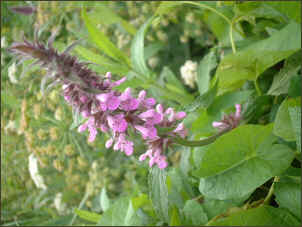
Marsh Woundwort another relatively scarce plant found in the area
|
Sites in Cookham Where Various Plants have been Recorded - click here |
Whilst it is true that many of our once common arable plants are now amongst our rarest wild flowers, there is still much to be found in the countryside surrounding the village. Indeed, in his expansive studies of Berkshire’s plant-life in preparation for his voluminous ‘Flora of Berkshire’, Prof Michael Crawley noted over 830 species of flowers, grasses and trees in the area surrounding the Cookhams.
These range from the very common dandelions and hawkweeds to the extremely rare Brown Galingale, found only in some half a dozen places in UK. We can find large, blousy pink Mallow flowers and the tiny speedwells and forget-me-nots in blues and reds. Bramble flowers attract huge numbers of insects through summertime and patches of poppies and thistles look stunning in autumn.
Some plants of course need a trained eye to recognise them and a few areas of Cookham have been studied by Sarah Wright. Her findings also appear on this site. We would like to hear from anyone with botanical knowledge who has been studying Cookham’s flora so we might build up the most accurate picture possible of what we have and where it is.
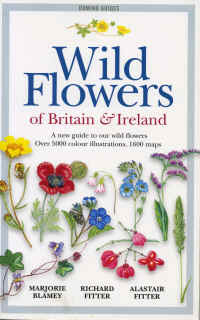
For anyone wishing to find out more about this topic, ‘Wild Flowers of Britain and Ireland’ (£16.99) by Marjorie Blamey and local father and son Richard and Alastair Fitter.
e-mail: wildlife@cookham.com
|
|
|
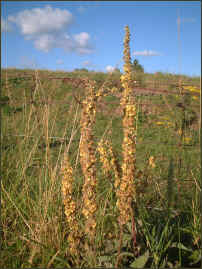
Dark Mullein - a spikey head of yellow and orange flowers signals this uncommon plant, which happens to be the only food plant for the Striped Lychnis moth caterpillar. |
|
|
|
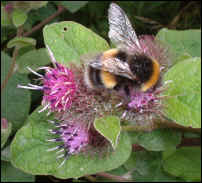
Red Clover – not only a favourite with us, but also with bees. |
 |
|
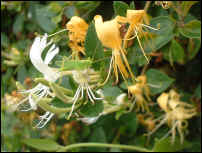
Wild Honeysuckle – “The heady fragrance of Honeysuckle is not just a magnet for Butterflies and moths, but seemingly Great Green Bush Crickets too” |